First time in Cambodia
First Time in Cambodia · last checked 20 Nov 2026
Last checked 20 Nov 2026 (Australia/Perth). Rules, fees and advice levels change, sometimes at short notice – always confirm on the official sources linked below before you book or fly.
Practical guide for Australian travellers. This is general travel information, not legal, medical or immigration advice.
The 10 things that matter most
- You need a visa. Australian passport holders can apply for a tourist e-Visa at the official site evisa.gov.kh or get a tourist visa on arrival. Both are valid for 30 days. The official tourist e-Visa (Type T) fee is US$30 — confirm the amount on the official site when you apply. Look-alike websites charge extra for the same visa. (Smartraveller, checked 20 Nov 2026.)
- The visa is not the arrival card. If you fly in, you must also complete the free Cambodia e-Arrival Card (CeA) at arrival.gov.kh within 7 days before you arrive, and show it on landing. There is no charge. (Smartraveller.)
- Your passport must be valid for at least six months from the date you arrive. Damaged passports, or ones with missing pages, are likely to be refused. (Smartraveller.)
- Smartraveller’s overall advice is exercise a high degree of caution. It also says do not travel to areas within 50 kilometres of the Cambodia–Thailand border in Banteay Meanchey, Oddar Meanchey, Preah Vihear, Battambang, Pailin, Pursat and Koh Kong, because of armed conflict and landmines. Land border crossings between Cambodia and Thailand remain closed. Check the page before you travel — the situation can change.
- The official currency is the Cambodian riel (KHR). US dollars are also legal tender. Take some US dollars for everyday costs, and say no if a card machine offers to charge you in A$. (Smartraveller.)
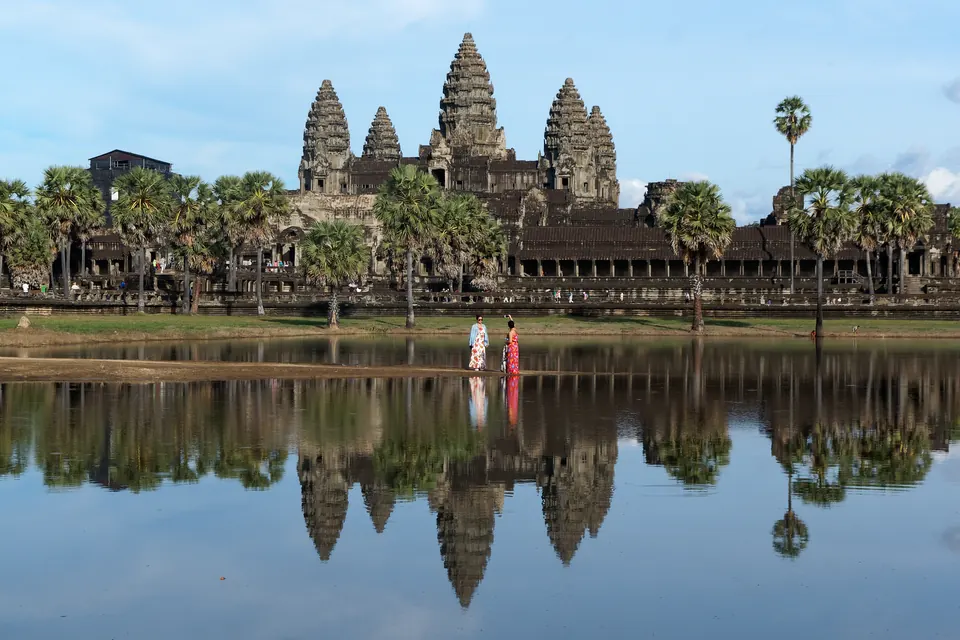
- Angkor tickets are sold only by Angkor Enterprise. Official prices on its available tickets page: 1-day US$37, 3-day US$62 (use within 7 days), 7-day US$72 (use within 30 days). Children under 12 are free but may need a passport as proof of age. The park opens at 5:00 AM.
- Cover shoulders and knees at temples, and dress modestly at royal and religious sites.
- Phone and bag snatching from motorbikes is common, including from tuk-tuks and open taxis. Wear bags across the body, keep phones out of sight, and be prepared to let go rather than struggle. (Smartraveller.)
- Use a rideshare app such as Grab or PassApp in Phnom Penh, Siem Reap, Sihanoukville and Kampot — Smartraveller says they are often safer than a flagged-down taxi, motorbike or tuk-tuk.
- Do not drink the tap water. Buy travel insurance that covers medical evacuation — hospital bills can run into the thousands of dollars, and a hospital may hold your passport until you pay. (Smartraveller.)
Entry and visas
Australian passport holders need a visa to enter Cambodia. Smartraveller (still current 20 November 2026, updated 22 September 2026) says you can apply for an e-visa online or get a tourist visa on arrival. These are valid for 30 days from the date you arrive. For longer stays, apply through a Cambodian embassy or consulate.
Apply for the e-Visa only at the official government portal: https://www.evisa.gov.kh/. The official tourist e-Visa (Type T) fee is US$30 (the government reduced it from US$36 from 1 January 2025). Processing is commonly described as about three business days; apply with time to spare. Confirm the fee and processing time on the official site when you fill in the form. Unofficial “visa” websites are not the government and often add a service charge.
If you are arriving by air, you must also submit the free e-Arrival Card (CeA) at https://arrival.gov.kh/ within seven days before arrival, and show it when you land. It is not a visa and there is no fee. (Smartraveller.)
Entry and exit conditions can change at short notice. See our Cambodia visa and entry page and the official links below.
Changing money
Currency: Cambodian riel (KHR). Smartraveller states that US dollars are also legal tender, and advises taking enough US dollars to cover basic travelling expenses. Smaller purchases are often in riel; larger tourist prices are often quoted in dollars.
When a card machine or ATM offers to charge you in A$ (“dynamic currency conversion”), decline and pay in the local currency or in US dollars as offered. Withdraw larger amounts less often if ATMs add a fee, and use bank-branch machines where you can. Our currency converter includes the riel and uses a daily public rate — we do not invent rates.
SIM and eSIM
The easiest option is an eSIM bought before you fly, so you land with data and keep your Australian number for bank texts. Local prepaid SIMs at the airport are widely available; you will need your passport to register them. We do not publish current SIM prices here because they change — compare a travel eSIM in the app, or buy a local SIM on arrival and confirm the pack at the counter.
Getting around
- Smartraveller says rideshare apps such as Grab and PassApp are common in Phnom Penh, Siem Reap, Sihanoukville and Kampot, and are often safer than a flagged-down taxi, motorbike or tuk-tuk.
- The islands of Koh Rong and Koh Rong Sanloem are reached by ferry from Sihanoukville. See Getting there.
- If you ride a scooter, check that your insurance actually covers it — many policies do not, unless you hold the right motorcycle licence and wear a helmet.
Common scams
- Bag and phone snatching from motorbikes is the one Smartraveller highlights: thieves target people walking or riding in open taxis, tuk-tuks or rickshaws, and some use knives to cut bags. Keep valuables close and be prepared to surrender them rather than risk injury.
- Fake visa websites that look like the official e-Visa portal and charge an extra fee. Use only evisa.gov.kh and arrival.gov.kh.
- Unofficial Angkor tickets. Buy only from Angkor Enterprise (website, official app, kiosk or ticket counter on Road 60).
Safety
Smartraveller, still current 20 November 2026: exercise a high degree of caution in Cambodia overall, because of recent armed conflict and related security risks. Do not travel to areas within 50 kilometres of the Cambodia–Thailand border in the provinces of Banteay Meanchey, Oddar Meanchey, Preah Vihear, Battambang, Pailin, Pursat and Koh Kong, due to the risk of armed conflict, military strikes, and landmines and other explosive remnants of war. Land border crossings between Cambodia and Thailand remain closed.
Siem Reap, Phnom Penh, Sihanoukville, Koh Rong, Koh Rong Sanloem, Kampot and Kep are not in that “do not travel” border list — but always re-read the official page before you go, and follow local advice. Petty theft is common in tourist areas.
Emergency numbers (Smartraveller): police 117, fire 118, medical 119 in Phnom Penh (elsewhere, contact a hospital directly). Tourist police booths operate in many tourist areas. The Australian Embassy is in Phnom Penh.
Health
- See your GP or a travel clinic 6–8 weeks before you fly about vaccines and medicines.
- Do not drink tap water — bottled or filtered only.
- Dengue is spread by day-biting mosquitoes — cover up and use repellent.
- Buy travel insurance that covers medical evacuation. Smartraveller warns that hospital care can cost thousands of dollars, often payable up front, and a hospital might keep your passport until you pay.
- Check Smartraveller’s Cambodia page and subscribe to updates.
Etiquette, culture and dress
- Cover shoulders and knees at temples, including Angkor, and at the Royal Palace.
- Take shoes off when a sign or host asks you to, including in some religious buildings.
- Ask before photographing people, monks or ceremonies.
- Stay calm and polite if something goes wrong — raising your voice rarely helps.
Laws to watch
Read Smartraveller’s local-laws section in full before you go. In outline: drug offences carry severe penalties; do not overstay your 30-day visa (there are daily fines and you can be detained); and do not take cultural artefacts or damaged temple stones home. Rules change — the official advice is the source, not this page.
Best time to go
Cambodia’s drier, cooler period is typically November to February. The hotter months usually run around March and April. The rainy season is typically May to October, with heavy downpours that can flood roads and slow island boats. That is a general climate pattern, not a forecast — check the weather as you book.
Official sources
- Smartraveller – Cambodia (still current 20 Nov 2026; updated 22 Sep 2026)
- Cambodia official e-Visa
- Cambodia official e-Arrival Card
- Angkor Enterprise — official tickets
- Australian Embassy, Phnom Penh
Last checked 20 Nov 2026 (Australia/Perth). General travel information only – not legal, medical or immigration advice. Spotted something out of date? Tell us.